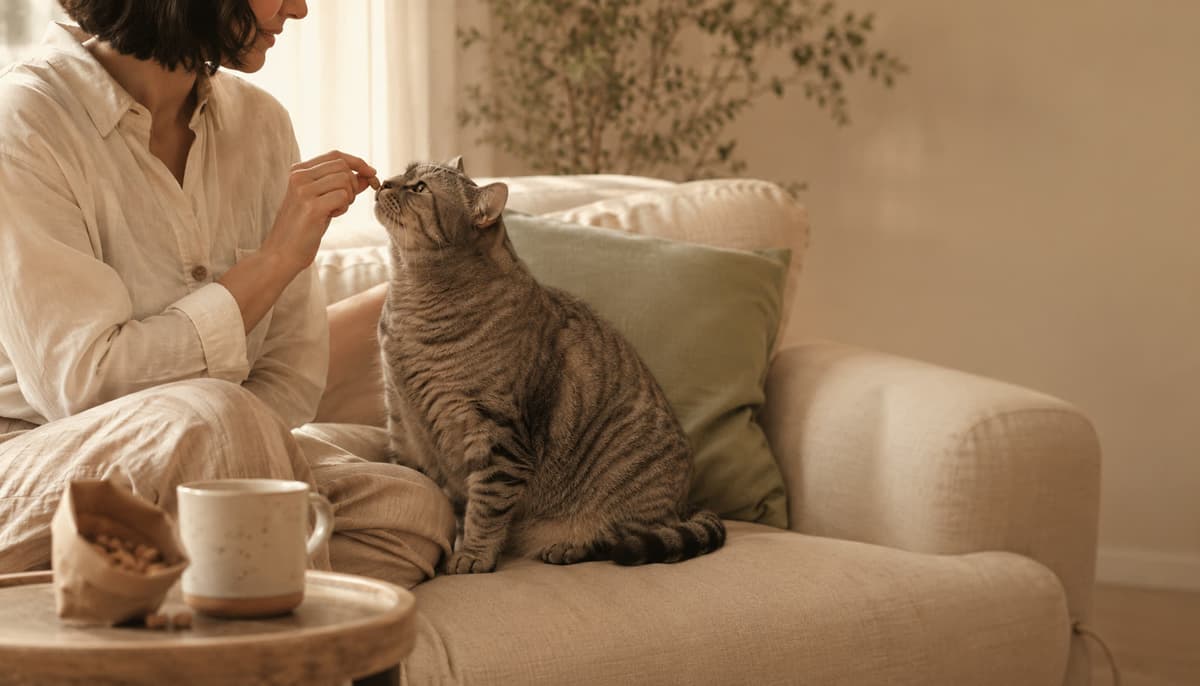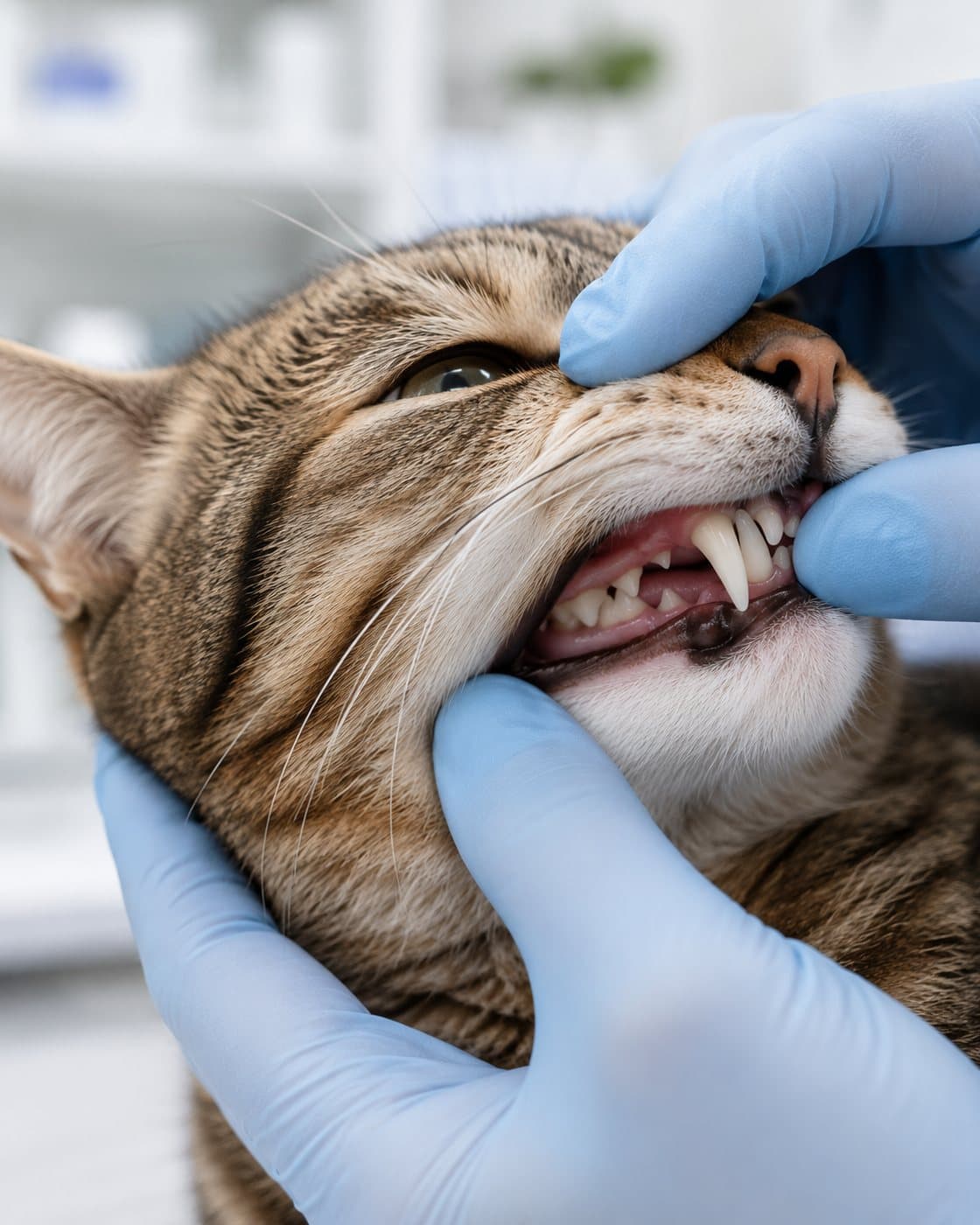
Your cat won't tell you its tooth hurts. It will eat, purr, and behave almost normally — because hiding pain is a survival strategy written deep in a cat's genes. An animal that shows weakness becomes an easy target. And beneath that everyday calm, the most common disease it will ever face may be at work. Not diabetes, not obesity, not kidney problems. Teeth.
This is no exaggeration. In the largest UK analysis of clinic records, periodontal disease turned out to be the single most common diagnosis in cats — far more common than obesity or hyperthyroidism. And yet most owners never look inside their cat's mouth until disaster strikes. Let's see what the research really says and what genuinely protects a cat's smile.
The scale of the problem: a cat's most common disease
In 2023, O'Neill and colleagues analyzed a random sample of 18,249 cats drawn from a population of 1.25 million veterinary patients in the United Kingdom. The results were unambiguous.
15.2%
That was the frequency of periodontal disease. And this is only recorded diagnoses — the real scale is higher, because many cases escape owners' notice and are never diagnosed.
Risk rises sharply with age: the median age of cats with periodontal disease was 9.5 years, compared with 4.9 years in healthy cats. Crucially, the same study showed that cats with periodontal disease had almost double (1.79×) the odds of developing at least one concurrent disease. Teeth don't get sick in a vacuum — they're a window onto the health of the cat's whole body.
The three main enemies of a cat's smile
Dental disease in cats isn't a single entity. It's three very different processes with distinct mechanisms that require entirely different treatment.
Periodontal disease
The most common and most "classic" condition. The mechanism is a cascade:
- Plaque builds up on the tooth (a sticky biofilm — a layer of bacteria and food debris).
- With the calcium salts in a cat's saliva, the plaque hardens into calculus (tartar).
- Bacteria irritate the gum, causing inflammation (gingivitis). At this stage the change is still reversible — once the teeth are cleaned, the gums return to health.
- Over time the process moves below the gumline, destroying the ligaments that hold the tooth and the bone itself. Periodontitis develops — an irreversible state that leads to loosening and loss of the tooth.
The key catch: the real, most dangerous disease happens below the gum, where it's invisible to the naked eye. That's why "eyeballing" the teeth and anesthesia-free cleaning of only the visible calculus solve nothing.
Tooth resorption (FORL)
A disease most owners have never heard of, yet it's downright common. The body's own cells — odontoclasts (normally active only in kittens during the change of teeth) — suddenly wake up in an adult cat and literally "eat" the tooth's tissues from within and from the root, until the crown crumbles and falls off. The process is extremely painful.
- It affects about one third of clinically healthy cats, and in the group presenting with dental problems — up to 60-67% of individuals.
- The changes intensify with age: in cats over 10 years old, resorption may be present in over 80% of animals.
- The most commonly "eaten" tooth is the mandibular fourth premolar.
Some changes develop entirely below the gum or in the root and are invisible during a visual exam. That's why full diagnostics absolutely require X-rays, which can only be done under anesthesia. A cat with advanced resorption may seem to eat normally, swallowing kibble whole — and suffer immensely in the process.
Feline chronic gingivostomatitis (FCGS)
The most severe and dramatic of the three. It's an extensive, immune-mediated inflammation — the body reacts with a powerful, destructive response of its own immune system to a small amount of bacteria on the teeth. The pain can be so overwhelming that the cat stops eating entirely and wastes away before your eyes.
- The disease is strongly linked to carriage of feline calicivirus (FCV).
- Treatment is based on radical extractions, often of nearly all the teeth — removing the hard surfaces drastically reduces the antigen load and relieves the dysregulated immune system.
- Success is high: full recovery or significant improvement is achieved in 50-80% of cats within a few weeks. Unfortunately, about 30% of cases remain refractory even after all teeth are removed and require chronic immunomodulatory treatment.
Why a cat hides it — and what to watch for
Millions of years of evolution have given cats a default mode of silently enduring pain. That's why signs of mouth problems can be very discreet.
Warning signs you must act on
- The cat eats more slowly, chews on one side, or drops pieces of food.
- It suddenly refuses dry food, strongly preferring wet (hard pieces hurt when bitten).
- A stale, putrid smell comes from the mouth (halitosis) — usually the first and easiest sign to catch.
- It drools more than usual, and the saliva may be tinged with blood.
- It paws at its mouth, "smacks" oddly, hates being touched on the head.
- It stops grooming, so the coat becomes dull and matted.
- Unexplained weight loss, withdrawal, or sudden aggression when picked up.
Even one of these signs should heighten your vigilance, and several warrant an urgent visit to the vet.
The myth to dismantle: "hard food cleans teeth"
This is one of the most persistent and harmful myths — in both the dry-food version and the raw-bones (BARF) version. The research here is highly nuanced.
The facts: hard texture really does mechanically scrape off deposits while chewing. That's why cats on dry food tend to have visibly less calculus than those on wet food only, and free-roaming cats less than house cats.
Although feral cats had noticeably less calculus thanks to a diet based on live prey, the prevalence of periodontal disease itself was identical in both groups. Less calculus does not mean no disease.
— Clarke & Cameron, Australian Veterinary Journal 1998
In other words: neither crunching dry food nor gnawing hard bones replaces prevention or stops the process developing below the gumline. What's more, most ordinary kibble is swallowed whole or shatters into dust at the first tooth strike, coating the tooth and supplying bacteria with the carbohydrates that commercial foods are known for. If you want real support from dry food, it must be specialized veterinary diets with the VOHC seal and a patented fibrous matrix.
What actually works: evidence-based prevention
Brushing — the gold standard
Daily brushing is the best-documented, most effective method of home prevention — it's been proven to prevent the development of periodontal disease. The key word is "daily": bacterial plaque renews within a dozen or so hours, so brushing once a week only stresses the cat unnecessarily. Get the cat used to it gradually, using only pet toothpaste (human fluoride pastes are toxic to cats!). Focus on the outer surface of the teeth at the gumline.
VOHC-sealed products and treats
If the cat absolutely won't allow brushing, the second line of defense is products with a proven effect. Look for the seal of the American Veterinary Oral Health Council (VOHC) on the packaging — it's a guarantee that the product passed rigorous clinical trials, not just a great-sounding description from the marketing department.
Professional cleaning under anesthesia
Despite the best home hygiene, most cats will eventually need a full procedure at the vet: scaling (ultrasonic calculus removal) above and below the gumline, polishing the crowns, probing the gingival pockets, and — crucially — X-rays of the entire dentition. This procedure must never be done without anesthesia.
Teeth and the rest of the body: why it's not "just teeth"
The most important reason to take mouth problems deadly seriously lies outside the oral cavity. Chronic periodontitis creates a constant focus of bacteria and inflammatory substances in the body, which pass through the damaged gums straight into the bloodstream, burdening key organs.
In 2018, Trevejo and colleagues analyzed a cohort of more than 169,000 cats over 11 years. They found that periodontal disease was associated with a significantly increased risk of developing chronic kidney disease (CKD) — and the risk rose linearly with the severity of the periodontal disease, highest in cats with a ruined oral cavity. They also showed an increase in markers of oxidative stress — cellular damage the body can no longer cope with in the face of a constant fight against infection in the mouth.
Practical summary
Cat dental health in five steps
- Look inside your cat's mouth regularly — get it used to this from a young age. Check for red gums, deposits, and smell.
- Brush daily with pet toothpaste, and if that's impossible — use VOHC-sealed products.
- Stop believing food will 'handle' the teeth — neither supermarket dry food nor the best raw bone replaces hygiene.
- Once a year (or as your vet advises) give the cat a professional check-up under anesthesia, always with X-rays. Avoid "anesthesia-free" pseudo-procedures.
- React to even subtle pain signals — in nature, weakness means death, so your cat will hide a toothache better than you'd think.
Teeth aren't a matter of feline cosmetics. They're the most common disease your cat will face, a source of hidden pain, and a research-proven threat to its kidneys. The good news: this is one of the few aspects of your animal's health over which you have real influence, through a simple daily routine.
Sources
- O'Neill, D.G., Kim, K., Brodbelt, D.C., Church, D.B., Pegram, C. & Baldwin, T. (2023). Periodontal disease in cats under primary veterinary care in the UK: frequency and risk factors. Journal of Feline Medicine and Surgery, 25(2).
- Trevejo, R.T., Lefebvre, S.L., Yang, M., Rhoads, C., Goldstein, G. & Lund, E.M. (2018). Survival analysis to evaluate associations between periodontal disease and the risk of development of chronic azotemic kidney disease in cats evaluated at primary care veterinary hospitals. Journal of the American Veterinary Medical Association, 252(6), 710-720. PMID: 29504859.
- Lommer, M.J. & Verstraete, F.J.M. (2000). Prevalence of odontoclastic resorption lesions and periapical radiographic lucencies in cats: 265 cases (1995-1998). Journal of the American Veterinary Medical Association, 217(12), 1866-1869.
- Ingham, K.E., Gorrel, C., Blackburn, J. & Farnsworth, W. (2001). Prevalence of odontoclastic resorptive lesions in a population of clinically healthy cats. Journal of Small Animal Practice, 42(9), 439-443.
- Clarke, D.E. & Cameron, A. (1998). Relationship between diet, dental calculus and periodontal disease in domestic and feral cats in Australia. Australian Veterinary Journal, 76(10), 690-693. PMID: 9830570.
- Winer, J.N., Arzi, B. & Verstraete, F.J.M. (2016). Therapeutic management of feline chronic gingivostomatitis: a systematic review of the literature. Frontiers in Veterinary Science, 3, 54.
- Druet, I. & Hennet, P. (2017). Relationship between feline calicivirus load, oral lesions, and outcome in feline chronic gingivostomatitis (caudal stomatitis): retrospective study in 104 cats. Frontiers in Veterinary Science, 4, 209.
- Buckley, C., Colyer, A., Skrzywanek, M., Jodkowska, K., Kurski, G., Gawor, J. & Ceregrzyn, M. (2011). The impact of home-prepared diets and home oral hygiene on oral health in cats and dogs. British Journal of Nutrition, 106(Suppl 1), S124-S127.
- Mata, F. (2015). The choice of diet affects the oral health of the domestic cat. Animals, 5(1), 101-110.
- Roudebush, P., Logan, E. & Hale, F.A. (2005). Evidence-based veterinary dentistry: a systematic review of homecare for prevention of periodontal disease in dogs and cats. Journal of Veterinary Dentistry, 22(1), 6-15.
- Gorrel, C., Inskeep, G. & Inskeep, T. (1998). Benefits of a 'dental hygiene chew' on the periodontal health of cats. Journal of Veterinary Dentistry, 15(3), 135-138.
- Cave, N.J., Bridges, J.P., Cogger, N. & Farman, R.S. (2012). Systemic effects of periodontal disease in cats. Veterinary Quarterly, 32(3-4), 131-144.
- American Veterinary Dental College (AVDC) (2019). Position statement on anesthesia-free dentistry (AFD). American Veterinary Dental College.
Frequently asked
Does dry food clean a cat's teeth?
Only slightly, and only some kinds. Most ordinary kibble crumbles at the first bite, so it doesn't scrub the tooth surface. Real effect comes only from special dental diets with the VOHC seal (larger kibble that keeps contact with the tooth, or polyphosphates that bind salivary calcium). Ordinary 'dental dry food' is far from enough and doesn't replace hygiene.
Do a BARF diet and raw bones protect a cat's teeth?
They protect against calculus, but not against periodontal disease. Hard texture mechanically scrapes off deposits, which is why feral cats have less calculus than house cats. But in the Clarke and Cameron study the prevalence of periodontal disease itself was the same in both groups — it was found in about 62% of feral cats despite a fully natural diet. A cat on BARF still needs dental prevention.
How can you tell a cat's teeth hurt?
Cats mask pain almost to the end. Subtle signs: eating more slowly or on one side of the mouth, dropping pieces of food, a sudden preference for wet food over dry, a foul, putrid smell from the mouth (halitosis), drooling, pawing at the mouth, reluctance to be stroked on the head, a neglected coat, weight loss. One sign warrants observation, several warrant a vet visit. Only an exam under anesthesia with X-rays gives the full picture.
Is anesthesia for teeth cleaning safe?
For the vast majority of cats, yes. Modern inhalation anesthesia, preceded by a pre-procedure health assessment (bloodwork) and constant monitoring of vital functions, has a very low risk profile. It allows what can't be done in a conscious cat: cleaning below the gumline, examining all tooth surfaces, and taking X-rays, which reveal about 60% of the problem hidden in the bone.
Is 'anesthesia-free teeth cleaning' a good option?
Definitely not. According to the position of the American Veterinary Dental College (AVDC), anesthesia-free scaling is not effective prevention nor a substitute for a real procedure. In a conscious cat you can't clean below the gumline (where the disease happens) or take X-rays. It's a cosmetic procedure — it removes visible calculus but masks the disease underneath and delays proper treatment.