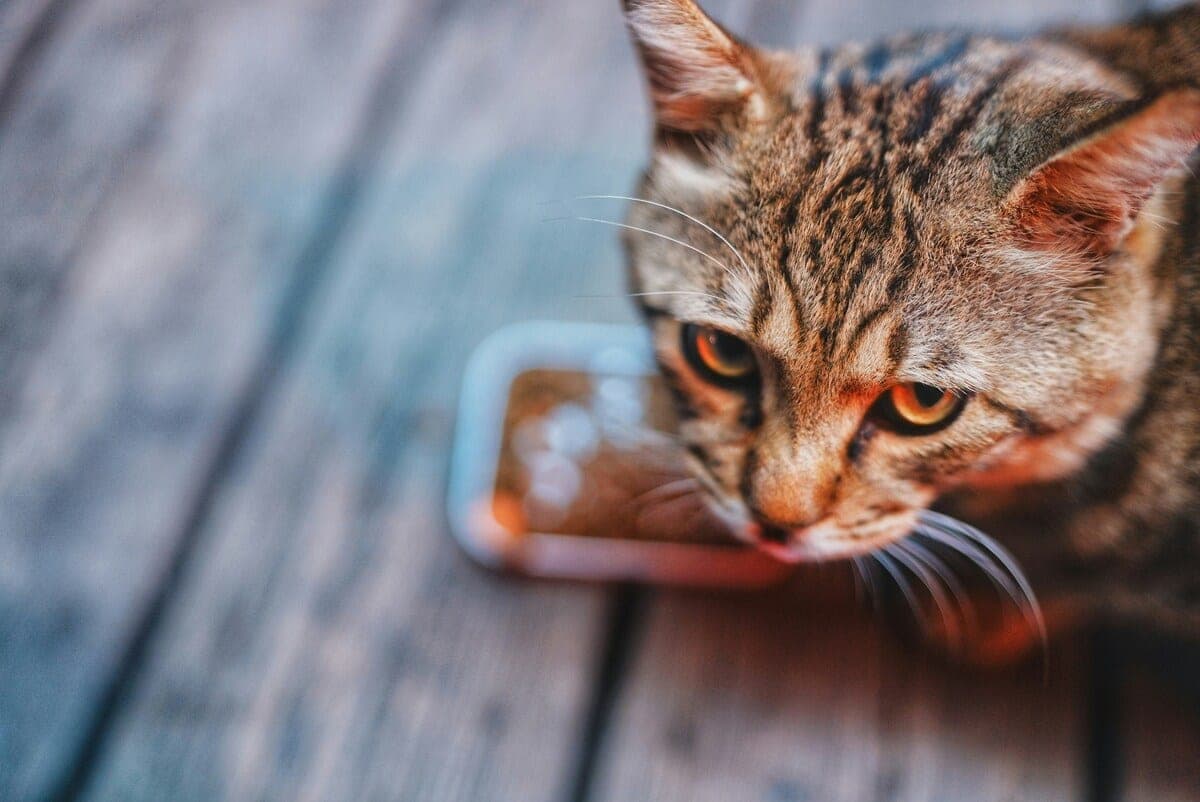
Your cat looks at the bowl of ground meat with about as much enthusiasm as if someone had set a math puzzle in front of it. Or maybe you watch it hunt a fly with surgical precision and wonder: is it possible to feed a cat the way nature feeds it? The answer is: yes. Meet whole prey — the diet that awakens the real tiger in your house cat.
What is the whole-prey diet?
Whole prey — literally "the entire catch" — is an approach that consists of serving whole, undivided animals: mice, chicks, quail, small fish. Not ground, not portioned, not broken down into components — whole, with skin, fur or feathers, bone, internal organs, brain, and stomach contents.
Sounds drastic? To humans — perhaps. But to a cat it's the most natural meal in the world.
8-12
Free-living house cats (Felis catus) eat from 8 to 12 small prey items over the course of a day — mainly mice, birds, lizards, and insects. They eat them whole, including the fur, feathers, innards, and the contents of the prey's digestive tract. This pattern was shaped over millions of years of evolution.
A cat doesn't need a nutritionist — it needs a mouse. In one small rodent there's everything: muscle protein, taurine from the heart and brain, calcium from the bones, vitamin A from the liver, fiber from the fur, and even prebiotics from the stomach contents.
— Plantinga, Bosch & Hendriks, 2011
Whole prey vs. BARF and RMB
The three main approaches to raw feeding have different degrees of complexity:
The BARF diet (Biologically Appropriate Raw Food) recreates the natural meal from separate components: muscle meat, raw bone, parenchymal organs, liver, fat + supplements (taurine, calcium, iodine, vitamins D, E, the B complex). BARF requires precise calculations, weighing, and a knowledge of Ca:P proportions. Scientific and effective, but complex.
RMB (Raw Meaty Bones) is the philosophy of Dr. Tom Lonsdale — serve raw meat on the bone and let nature do the work. Simpler, because it skips most of the supplements, but it still requires variety and keeping an eye on organs.
Whole prey stands at the top of this pyramid of simplicity. You don't calculate, you don't weigh, you don't supplement — because the entire body of the prey is already perfectly balanced. A mouse contains exactly the proportions of calcium to phosphorus, taurine, vitamins, and minerals a cat needs. BARF tries to imitate whole prey from separate puzzle pieces. Whole prey is the puzzle already assembled.
What can you serve?
Day-old chicks
Number one for beginners. Day-old chicken chicks are small, soft, and easy to eat even for cats that have never dealt with whole prey. The bones are cartilaginous and entirely safe. Available in pet shops (the reptile and bird-of-prey food section) in frozen form, around 1-2 zł each. They contain residual yolk — an excellent source of fats and fat-soluble vitamins.
Quail (whole)
Ideal in proportion to a cat's size. An adult quail weighs 150-200 g — the equivalent of one larger meal or two smaller ones. Quail bones are delicate and fully edible. Quail contain all the internal organs in natural proportions: liver, heart, gizzard, kidneys. Available from quail breeders, at markets, and from raw-food suppliers.
Feeder mice and rats
The mouse is the evolutionary archetype of the feline meal — the food to which feline physiology is most perfectly adapted. Frozen feeder mice and rats are available in pet shops (the terrarium section). Bred in controlled conditions. An adult mouse (~25 g) is an ideal single meal or snack. Feeder rats (100-300 g) — for larger cats or as a meal for a whole day.
Whole small fish
Sardines and sprats — fresh or frozen — round out the whole-prey diet. Small fish eaten whole supply omega-3, iodine, vitamin D and easily absorbed calcium from the small bones. Serve 1-2 times a week as part of the rotation. Avoid large fish (tuna, salmon) because of the risk of heavy-metal accumulation.
Rabbit parts
Whole rabbit heads, rib cages with organs, hind legs with bone — valuable parts close to whole prey. Rabbit is hypoallergenic meat, low in fat, rich in protein. Ideal for cats with a sensitive digestive system or allergies.
Only from reliable sources, always frozen 72 h
Buy exclusively from feeder-animal breeders, trusted pet shops, or certified raw-food suppliers. Never feed a cat wild mice, birds, or fish caught in polluted waters — toxoplasmosis, tapeworms, heavy metals. All feeder animals should be frozen at -20°C for at least 72 hours before serving.
Benefits of the whole-prey diet
- Complete nutrition without supplements — whole prey contains everything in natural, perfectly absorbable proportions. Taurine from the heart and brain, vitamin A from the liver, calcium and phosphorus from the bones, iron from the spleen, iodine from the thyroid, fatty acids from the fat tissue. No powdered supplement can match this bioavailability.
- Mental stimulation and the hunting instinct — eating whole prey is a multidimensional experience. The cat has to plan, tear, hold with its paws, turn, bite from different angles. This reduces boredom, stress, and destructive behavior. A cat after whole prey is calm — unlike a cat that devoured a ground mush in 30 seconds and is bored again.
- Natural fiber from fur and feathers — indigestible, but passing through the digestive tract and cleaning it mechanically. It also helps form and expel hairballs.
- Dental and gum health — chewing bone, cartilage, skin, and tendons is natural oral hygiene. Cats on whole prey have far less tartar and periodontal disease.
- Taurine in its best form — the heart, brain, and eyes of the prey are among the richest natural sources of taurine — in a perfectly absorbable form, in amounts precisely matched to a predator's needs.
Downsides and challenges
400-600 zł
Whole prey is more expensive than BARF based on chicken and turkey. A frozen mouse costs 3-6 zł, a quail 8-15 zł. Feeding exclusively whole prey every day, the monthly cost for a single cat can reach 400-600 zł.
- The aesthetics — not for the squeamish — the sight of a cat eating a rodent with its fur, tail, and innards isn't for everyone. If it crosses your comfort line — BARF made from ground ingredients gives very similar nutritional results.
- Supply difficulties — unlike chicken, a feeder mouse requires a trip to a specialist shop or an online order. In smaller towns, availability can be limited.
- Not always 100% — house cats (neutered, not very active) have a different energy requirement than their wild ancestors. It's harder to control calories and weight with whole prey as the only source.
- The risk of parasites — feeder animals from reliable sources, frozen for 72 h+, are safe, but the risk is never zero. Freshly caught rodents and birds — never.
- The mess — a cat eating a whole quail does so enthusiastically. Feathers, bits of skin, stains. It's worth serving whole prey on an easy-to-clean surface or on a dedicated mat.
How to start?
- Start with day-old chicks — the easiest entry point. Chicks are small (35-40 g), soft, featherless, and with cartilaginous bones. Most cats instinctively recognize them as food. Buy them frozen at a pet shop (the terrarium / exotics section), thaw overnight in the fridge, and serve at room temperature.
- Freeze for at least 72 hours — before the first serving, make sure the feeder animals were frozen at -20°C for at least 72 hours. Deep freezing eliminates most parasites.
- Thaw to room temperature — move the portion from the freezer to the fridge overnight, and 15-20 minutes before serving leave it on the counter. Cats prefer food at the prey's body temperature (~37°C). Cold food straight from the fridge is sometimes refused and is harder to digest.
- Supervise the first meals — most cats instinctively grab the chick, hold it with their paws, and start from the head. Some initially play with the food, toss it, carry it around the house — that's normal hunting behavior. Be present, but don't interfere.
- Gradually introduce larger prey — once the cat masters chicks (usually after 2-3 weeks), move to whole quail. Feathers, harder bones, organs — the next level of difficulty. Then feeder mice, the closest to natural prey.
- Build a rotation — the best whole-prey diet is built on variety. Chicks, quail, mice, small fish — each species supplies a slightly different nutritional profile.
Summary
Whole prey is the gold standard of natural feline nutrition — the closest thing to what feline physiology has expected for millions of years. Whole prey is a perfectly balanced meal without calculations, supplementation, or a nutrition degree. Nature in its purest form.
Do you have to feed your cat whole prey exclusively? Absolutely not. Even if your base is precisely balanced BARF, adding whole prey 2-3 times a week enriches the diet with mental stimulation, natural fiber, taurine from the prey's heart and brain, and the satisfaction of the hunt.
Start with one chick. Watch your cat — that wild glint in the eye, the focus, the instinctive precision of movement. And consider that you're letting it be what it truly is: a small, perfect predator that simply needed a chance to show it.
Sources
- Plantinga E.A., Bosch G., Hendriks W.H. (2011). Estimation of the dietary nutrient profile of free-roaming feral cats: possible implications for nutrition of domestic cats. British Journal of Nutrition, 106, S35-S48.
- Lonsdale T. (2001). Raw Meaty Bones: Promote Health. Rivetco Pty Ltd.
- Driscoll C.A., Macdonald D.W., O'Brien S.J. (2009). From wild animals to domestic pets, an evolutionary view of domestication. Proceedings of the National Academy of Sciences, 106(Suppl 1), 9971-9978.
- Bradshaw J.W.S. (2006). The evolutionary basis for the feeding behavior of domestic dogs (Canis familiaris) and cats (Felis catus). Journal of Nutrition, 136(7), 1927S-1931S.
Frequently asked
Is whole prey safe for a house cat?
Yes, as long as you buy feeder animals from reliable sources (breeders, pet shops) and freeze them at -20°C for at least 72 hours before serving. Freezing eliminates most parasites, including Toxoplasma gondii.
Do I have to use a calculator with whole prey?
No. Whole prey is already perfectly balanced — nature did the calculation for you. A mouse contains exactly the proportions of calcium, phosphorus, taurine, vitamins, and minerals a cat needs.
Where to start — with mice?
No. The best entry point is day-old chicks — small (35-40 g), soft, featherless, with cartilaginous bones. Most cats instinctively recognize them as food. Quail later, mice last.
Can I feed my cat whole prey exclusively?
Yes, but it takes attention. House cats (neutered, not very active) eat less than their wild ancestors, so it's harder to control calories and weight. Many owners choose a mixed model: BARF as the base + whole prey 2-3 times a week.
Won't the fur and feathers harm the cat?
No. It's natural fiber — indigestible, but passing through the digestive tract and mechanically cleaning it. It also helps form and expel hairballs.